Deal setup flow
Guided setup removed ambiguous first actions.
Case Study / Deal Room Platform
A system that turns company exploration into structured deal flow.
Hook
Interest and data were there. What was missing was execution continuity—shared structure, a clear entry point, and a bridge from research to commitment.
Problem
This workflow required users to navigate across disconnected surfaces to complete a single task.
High friction from repeated context switches
Workflow chaos — fragmented paths across the product
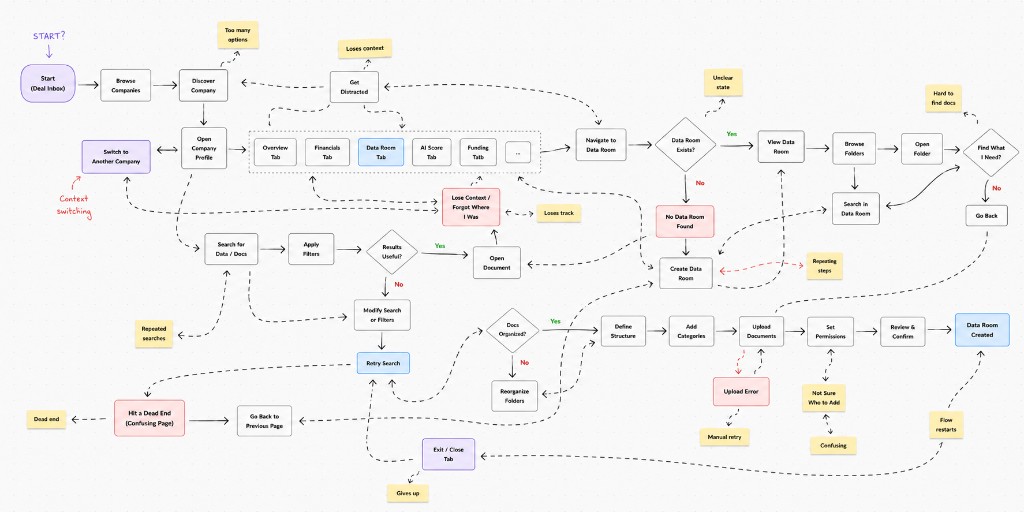 Repeated loops
Context switching
Manual tracking
Repeated loops
Context switching
Manual tracking
Turning Point
The issue wasn’t the system. It was where the system starts.
Deal room logic was sound, but users weren’t entering naturally. We had optimized downstream mechanics and missed the upstream entry point.
Key Insight
Users don’t start with deals. They start with companies.
Intent forms on the company profile—not inside the deal room.
Entry Point Solution
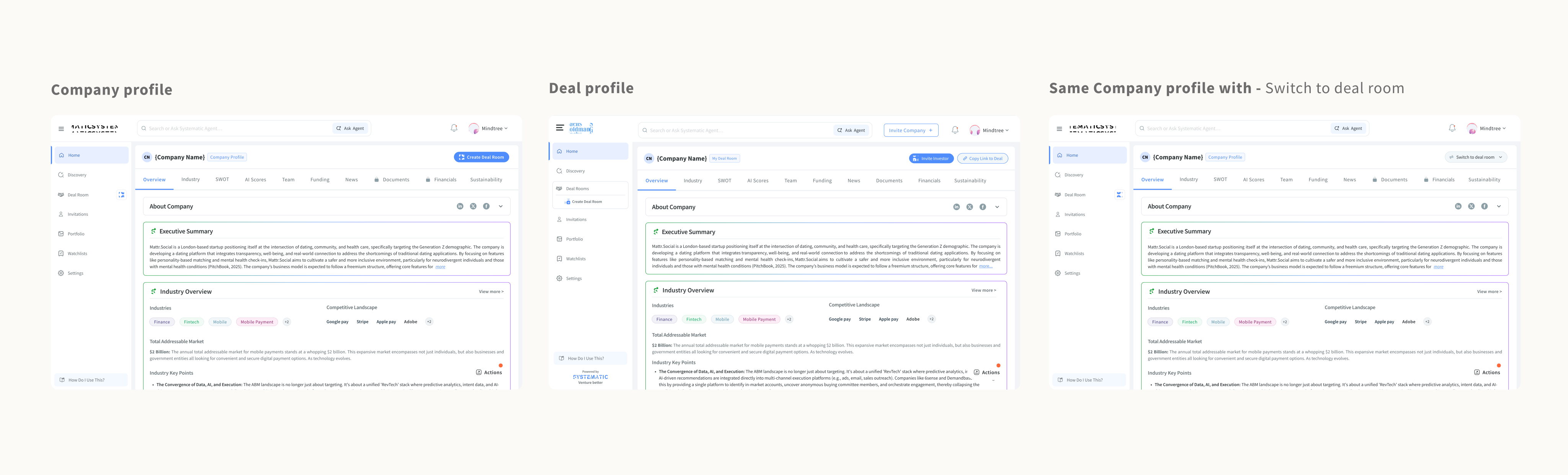
We placed deal room creation directly at the moment of user intent.
Enabled faster transition from discovery to execution
First-Time Experience
Users saw what the Deal Room is, why it matters, and what happens next—before committing to setup.
Improved clarity during deal creation
System Design
Each surface reinforced momentum, clarity, and the right action at the right moment.
Guided setup removed ambiguous first actions.
Indicators showed deal maturity and next priorities.
Access aligned confidentiality with deal progression.
Complexity appeared only when context required it.
Step cues reduced dead-ends on the path to commitment.
Time signals pushed momentum without dark patterns.
Cross-role view kept teams aligned on readiness.
Eliminated unnecessary setup steps
Design Flow
From setup to access control to operations—each step supports the next without breaking context.
We simplified deal setup into a clear, linear flow with minimal backtracking.
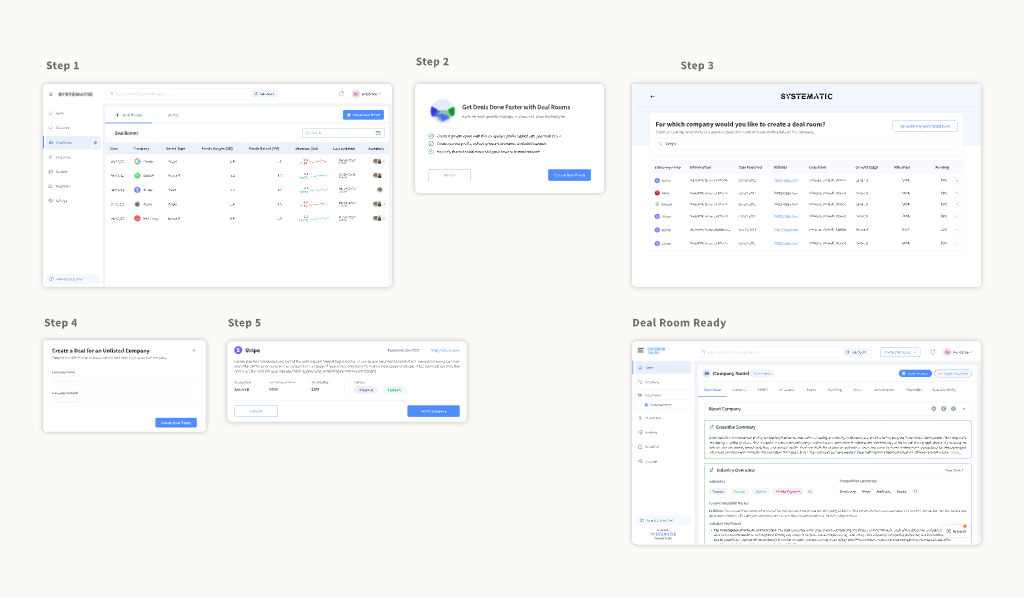
Guided setup from company context to live deal room
Improved clarity during deal creation
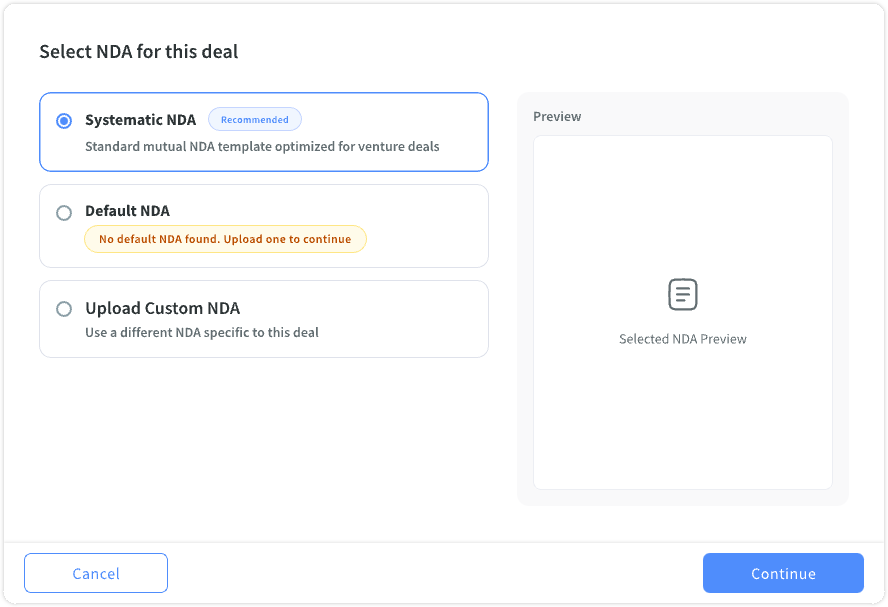
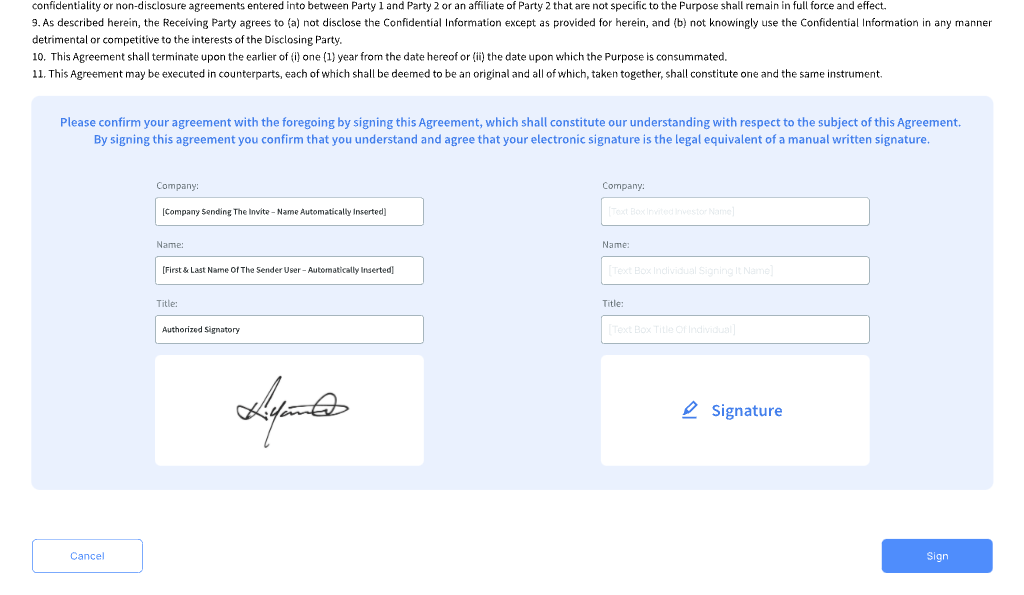
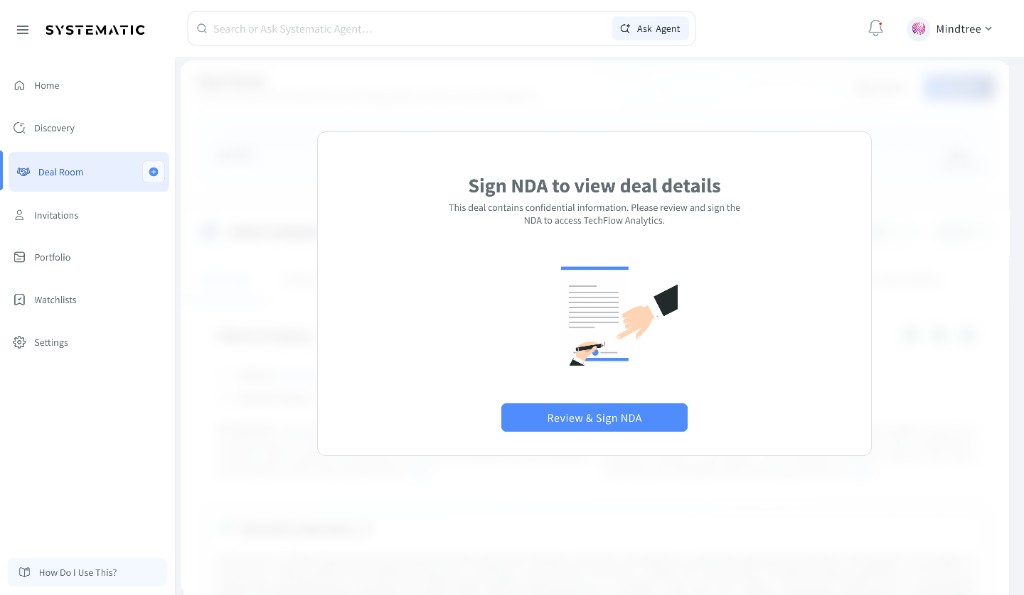
We reduced NDA friction to a single, contextual step triggered only when access is needed.
Step 1 · Access attempt
Room content blurred until access is verified
Step 2 · NDA prompt
One surface explains obligations before unlock
Step 3 · Signing
Single Sign NDA action—no nested legal maze
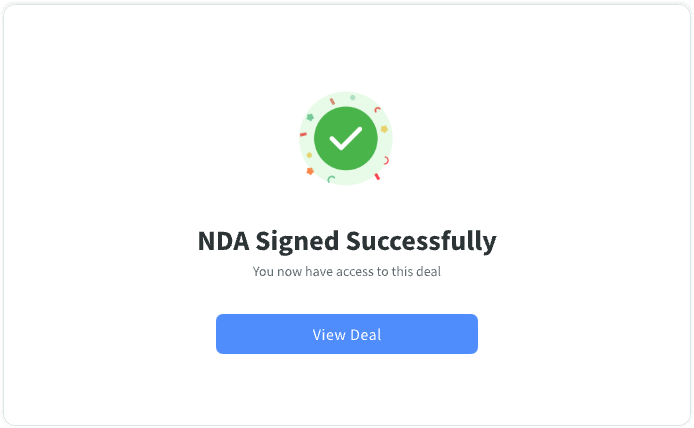
Step 4 · Access granted
Content unlocks instantly after signing
Minimized friction in accessing sensitive data
The dashboard consolidates all deal activity into a single, actionable workspace.
Overview
Deal Room
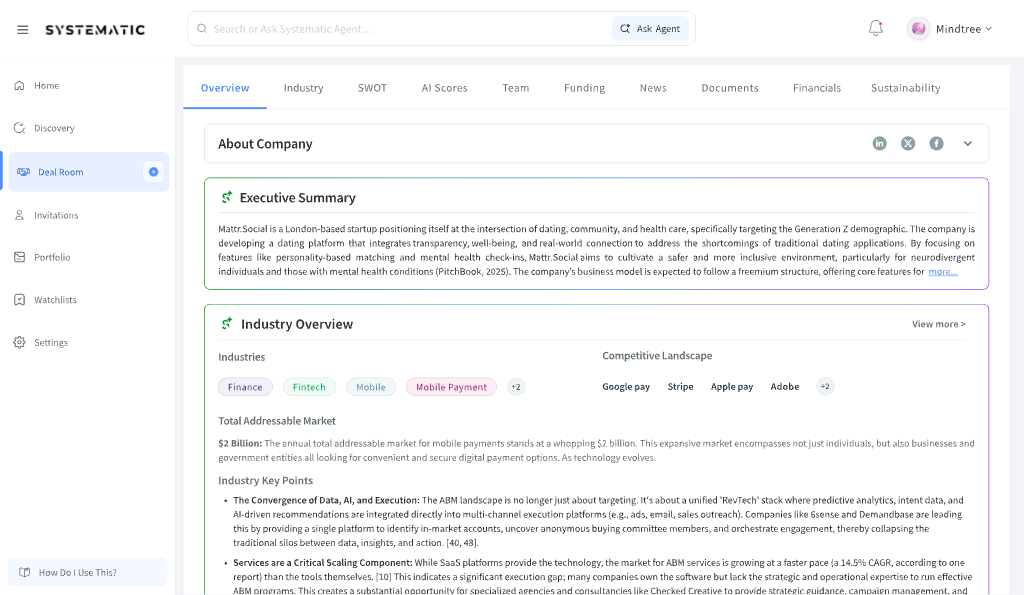
Actions
Insights
Improved overall operational clarity
Impact
Shifting the entry point changed behavior—not just feature awareness.
What Didn’t Work
Learnings
Role
Owned UX strategy and execution for Deal Room behavior—entry-point architecture, setup flow definition, and interaction alignment with PM and engineering.
Delivery Scope
Defined cross-surface behavior contracts, state logic, progressive disclosure rules, and post-launch adoption metrics.
Outcome